
CStore1
Connecting industry with Australian offshore CO₂ storage
CStore1 is deepC Store's flagship carbon capture and storage project.
It is being developed as a floating, multi-user CCS hub that can receive captured CO₂ transported by ship from hard-to-abate industries in Australia and across the Asia-Pacific.
The CO₂ would be permanently stored in suitable geological formations deep beneath Australia's offshore seabed.
By using ships rather than relying only on long-distance pipelines, CStore1 is designed to make Australian offshore CO₂ storage accessible to industries located far from suitable storage sites.
The initial CStore1 development is targeting approximately 3–5 million tonnes of CO₂ storage capacity per year.

How CStore1 works
1. Capture and liquefaction
CO₂ is captured from industrial facilities and converted into liquid form so that it can be transported efficiently.
2. Transport by ship
Specialised liquefied CO₂ ships transport the captured CO₂ to the CStore1 offshore hub.
3. Floating storage and injection
At CStore1's Floating Storage and Injection (FSI) Hub, the liquid CO₂ is received, temporarily stored and prepared for injection.
4. Store
The CO₂ is injected through wells into suitable geological formations deep below the seabed, where it is intended to remain permanently stored.
Why make CStore1 a ship-based, multi-user CCS hub?
Industrial emissions and suitable geological storage are not always located in the same place.
CStore1 is designed to bridge that distance and offers four important advantages:
1. Accessible
Shipping allows industries that are far from suitable storage to access CCS.
2. Shared
Multiple users can share infrastructure rather than each developing a separate storage solution.
3. Flexible
Ships and floating facilities can be moved, expanded, and redeployed over time as customer needs change.
4. Scalable
CStore1 is designed as a standardised and repeatable model that can support additional users and future offshore CCS hubs as demand grows.
These features are intended to make permanent geological storage available to a wider range of hard-to-abate industries.

Why store CO₂ in offshore Australia?
Australia has extensive geological formations with the potential to store large quantities of CO₂.
dCS holds interests in two Commonwealth-awarded offshore CO₂ storage acreages with combined estimated storage capacity exceeding one billion tonnes of CO₂.
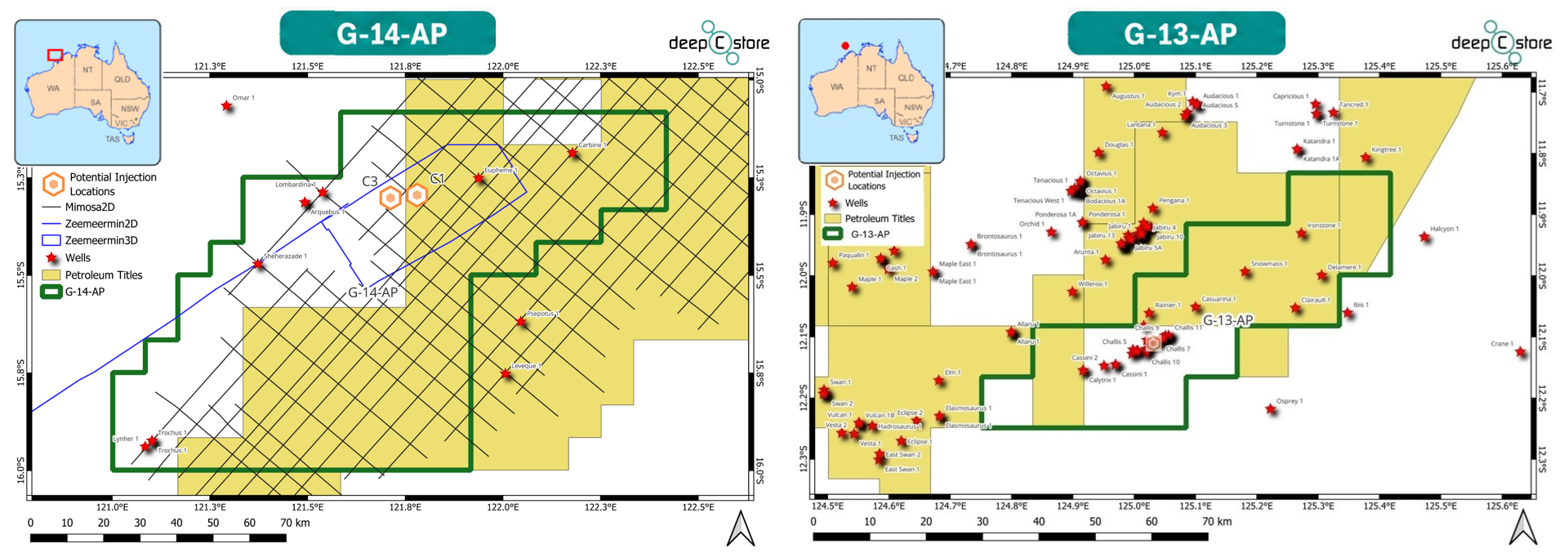
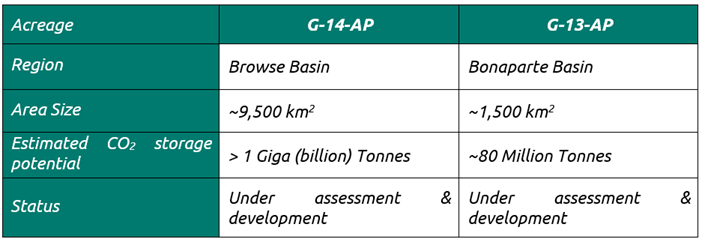
These storage positions provide the foundation for CStore1 and potential future CCS hubs.
Australia also has an established offshore regulatory system and long-standing energy, resources and investment relationships with countries across the Asia-Pacific.
For regional industries, access to Australian storage can provide another decarbonisation pathway and help diversify the locations available for permanent CO₂ storage.
From energy partnership to carbon management
For decades, Australia has supplied energy and resources to many of the industrial economies of the Asia-Pacific.
As those economies decarbonise, there is an opportunity to extend these relationships into carbon management.
CStore1 is being developed to help connect industrial centres with Australian geological storage—supporting emissions reduction while helping industries maintain the products, employment and supply chains on which modern economies depend.
This is particularly relevant for hard-to-abate sectors such as steel, chemicals, power, gas processing, cement and other industrial activities where renewable energy, electrification and energy efficiency may not eliminate all emissions.
Enabling transboundary CCS
Some of the Asia-Pacific's largest industrial centres have significant CO₂ emissions but limited access to suitable domestic CO₂ storage.
Transporting liquefied CO₂ by ship creates the potential to connect those industries with suitable storage locations in other countries.
CStore1 is therefore being developed for both domestic and transboundary CCS, connecting industrial CO₂ sources in Australia and the Asia-Pacific with Australian offshore geological storage.
For countries such as Japan, access to Australian offshore storage could provide an additional pathway for reducing industrial emissions while diversifying long-term CO₂ storage options.
Transboundary CCS requires governments, regulators and industry to work together on matters including environmental protection, CO₂ accounting, transport, liability and long-term storage responsibilities.
Any cross-border CO₂ transported to CStore1 would be subject to the required international arrangements and Australian regulatory approvals.
CStore1 Partners
dCS partners with J-POWER and other leading global energy and shipping companies, CO₂ emitters, research institutions and investors for making CCS accessible to industries that may be too far from suitable storage sites to connect by pipeline.
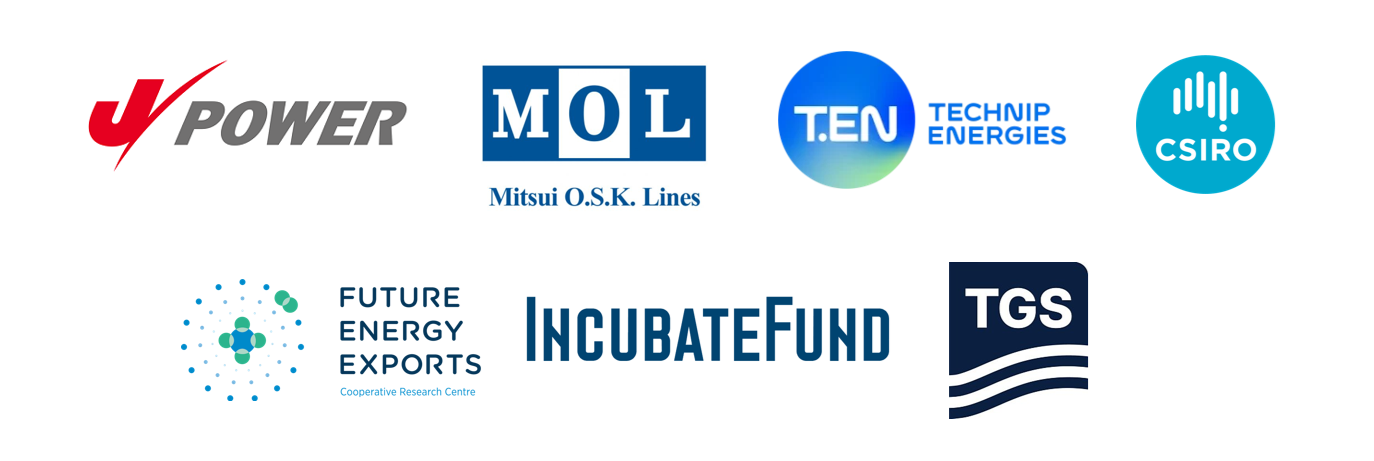
More information on dCS’s CStore1 Partners are available at link.
CStore1 - Progress to date
CStore1 began as a founder-led concept in 2020. Since then, dCS has:
1. Secured interests in two Commonwealth-awarded offshore CO₂ storage acreages with combined estimated capacity exceeding one billion tonnes;
2. Secured development participation by J-POWER, Japan’s largest wholesale power producer;
3. Established delivery and operations partnership with Mitsui O.S.K. Lines, a leading global cryogenic-gas shipping company, and Technip Energies, a global tier-one industrial EPC contractor;
4. Conducted joint study work with Nippon Steel, Japan’s largest steel manufacturer, concerning approximately 5 Million Tonnes Per Annum (MTPA) of prospective CO₂ offtake;
5. Executed a Joint Study Agreement with Kansai Electric Power, Japan’s second-largest electric utility, concerning up to 10 MTPA of prospective CO₂ offtake;
6. Secured strategic corporate equity now held by TGS, an Oslo-listed global marine seismic data-services company;
7. Secured institutional investment from Japan’s Incubate Fund; and
8. Secured Commonwealth R&D Tax Incentive funding
CStore1 is not yet operating. Our focus is progressively reducing risk and building the technical, commercial and regulatory foundations required for a Final Investment Decision.
How dCS develops CStore1 responsibly
dCS recognises that CO₂ storage must deliver genuine, enduring emissions reduction while being developed safely, responsibly and transparently.
For more information on how dCS develops CStore1 responsibly, please see the Governance (link) and Sustainability (link) sections of the dCS website.